
Best Artificial Limb in India 2026: what you should actually look for?
Find the best artificial limb in India with expert insights on fit, comfort, and customization. Learn what truly matters before choosing a prosthetic.
CUSTOM PROSTHETICS
4/9/202611 min read
Introduction
What is an Artificial Limb, really?
Technically, it’s a replacement for a missing arm or leg.
But if you think about it from a user’s perspective, it’s more like something you rely on every single day without wanting to think about it too much.
It affects how you stand, how you shift weight, how long you can walk before getting tired.
Most people come across these categories:
Lower limb prosthetics, like below-knee or above-knee
Upper limb prosthetics, mostly focused on function
Simple classifications, yes. But the real complexity lies in how each one is built for the person using it.
Because even two people with similar conditions can have completely different experiences.
Why getting the Right Fit changes everything?
If you’ve been trying to find the best artificial limb in India, chances are you’ve already seen a lot of “perfect” claims.
Everything sounds advanced. Everything promises comfort. Everything says it’s the best.
And honestly, that’s where it gets confusing.
Because when you talk to real users, the conversation changes. It’s not about which prosthetic looked better on paper. It’s about which one felt right after a few hours of use. Or which one didn’t need constant adjustment. Or simply… which one didn’t make walking feel like effort.
That gap between expectation and experience is what most people don’t prepare you for.
So instead of chasing the “best option,” it helps to understand what actually makes a prosthetic work in everyday life.
Let’s not overcomplicate this.
If something doesn’t fit your body properly, you will feel it. Maybe not immediately as pain, but as a constant need to adjust.
A slight shift while walking. A bit of pressure in one spot. A feeling that you’re compensating somehow.
That’s usually how it starts.
Now compare that with a prosthetic that’s fitted well.
✔ You don’t keep checking it while walking
✔ Your steps feel more even
✔ You don’t feel exhausted after short distances
It’s not dramatic. It’s subtle, but very noticeable over time.
And that’s what people mean when they say a prosthetic “works well.”
What actually matters (beyond the marketing?)
This is where it helps to slow down and look at the basics instead of features.
1-Understanding the Person Comes First
No prosthetic should begin with design. It should begin with understanding.
How active are you?
How long do you usually stay on your feet?
What kind of movement does your day involve?
These things matter more than most brochures will ever tell you.
And if this step feels rushed, there’s a good chance something will feel off later.
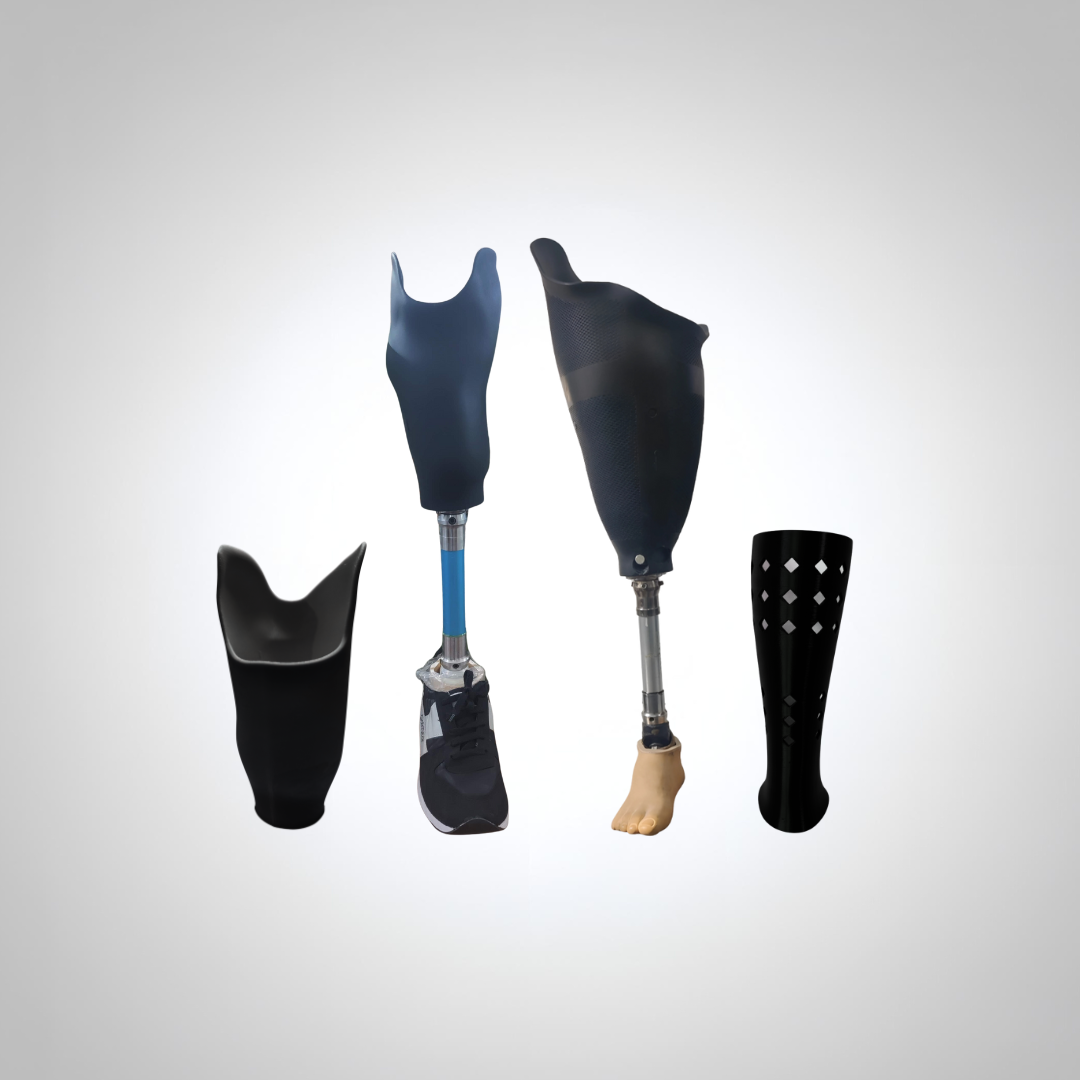
2-The Socket is more important than you think
A lot of people don’t realize this in the beginning.
But the socket is where most comfort issues either get solved… or created.
It’s the part that connects directly with your body. So even a small issue here doesn’t stay small.
A good socket usually:
✔ Feels secure without being tight
✔ Doesn’t create sharp pressure points
✔ Allows natural movement without friction
When it’s right, you almost forget about it. And that’s exactly how it should be.
3-Not everyone needs “Advanced”
This is one of those things that sounds counterintuitive.
Yes, there are highly advanced prosthetics available today. But that doesn’t automatically make them the right choice.
In some cases, people actually do better with simpler setups that are well-fitted and easy to use.
It really depends on your lifestyle.
Someone very active might benefit from advanced components. Someone with a steady routine might just need consistency and comfort.
There’s no universal answer here.
4-Alignment quietly affects everything
Alignment is rarely talked about in detail, but it plays a huge role.
Even a slight imbalance can change how your body moves.
You might not notice it immediately. But over time, it shows up as fatigue or strain in other areas.
When alignment is done well, movement feels smoother. Less forced. More natural.
Types of Artificial Limbs in India
There are quite a few options available now, which is a good thing. But it can also make decisions harder.
Below-knee prosthetics are generally easier to get used to. Since the knee joint is still functional, movement feels more intuitive.
Above-knee prosthetics take more time. They require careful fitting and some training before things start feeling stable.
Upper limb prosthetics are different. They’re less about walking and more about function. Holding, gripping, performing daily tasks.
Each one serves a different purpose. And choosing between them is less about “which is better” and more about “what do you actually need?”
Common mistakes people make
This is worth paying attention to.
A lot of decisions happen quickly, often based on what sounds convincing at that moment.
People tend to assume:
Higher cost means better outcome
Advanced features solve all problems
One setup works for everyone
But that’s rarely how it plays out.
✔ Most prosthetics need adjustments over time
✔ Follow-ups are part of the process, not optional
✔ Small corrections can improve comfort a lot
Skipping these realities often leads to disappointment later.
Why customization makes sense?
If there’s one thing that consistently improves outcomes, it’s customization.
Because no two bodies are the same.
The shape of the limb, pressure sensitivity, walking style… all of it varies.
A customized prosthetic takes these into account. It adapts to you instead of expecting you to adjust constantly.
And over time, that difference becomes very noticeable.
You move more freely. You trust your movement more. You stop second-guessing each step.
A small but real example!
There was a case where someone avoided walking longer distances. Not because of severe pain, just discomfort that never fully went away.
When the prosthetic was reviewed, the issue wasn’t major.
A slight alignment shift. Minor socket adjustment.
That’s all..!
But once those were corrected, the experience changed completely.
It’s a reminder that sometimes the problem isn’t the prosthetic itself. It’s the small details that need attention.
Cost, without overthinking it
Cost always comes up, and that’s fair.
Prosthetics in India can vary quite a bit depending on design and customization.
But looking at price alone doesn’t tell the full story.
A prosthetic that fits well:
Needs fewer corrections
Feels comfortable for longer hours
Reduces physical strain
And that adds value in ways that aren’t immediately visible.
So instead of just asking “how much,” it helps to ask “how well will this work for me over time?”
How to approach this without stressing too much?
If this all feels like a lot, simplify it.
Start with a proper evaluation. Don’t rush through fitting. Give yourself time to understand how it feels.
You don’t need to overanalyze everything.
Just keep a few things in mind:
Comfort matters more than features
Your experience matters more than claims
It’s okay if adjustments are needed
If something feels off early on, it usually is.. And that’s okay. That’s part of the process.
Why the basics still win?
Even with all the advancements, the fundamentals haven’t changed much.
A good prosthetic still comes down to:
✔ Proper assessment
✔ Thoughtful fitting
✔ Regular refinement
Technology supports this. It doesn’t replace it.
And when these basics are done well, the outcome speaks for itself.
Conclusion
There isn’t a single answer to what the best artificial limb in India is, and maybe that’s the point..!
Because the right choice isn’t about what works best in general. It’s about what works best for you.
When the fit feels right and movement becomes easier, you notice the difference without having to think about it.
And that’s when a prosthetic truly starts doing its job!
FAQs
Which artificial limb is best in India?
The best option depends on your body, activity level, and comfort. There’s no one-size-fits-all answer.
How much does it cost?
Costs vary based on type and customization. It’s better to focus on long-term comfort than just initial price.
How long does adjustment take?
Usually a few weeks to a few months. It depends on the individual and the prosthetic type.
Is customization necessary?
In most cases, yes. It improves fit and makes daily use much easier.
If you’re looking for the best artificial limb in India, the right choice starts with the right assessment..
Book your consultation today and take the first step toward comfortable, confident movement!
Best Artificial Limb in India 2026: what you should actually look for?
Introduction
What is an Artificial Limb, really?
If you’ve been trying to find the best artificial limb in India, chances are you’ve already seen a lot of “perfect” claims.
Everything sounds advanced. Everything promises comfort. Everything says it’s the best.
And honestly, that’s where it gets confusing.
Because when you talk to real users, the conversation changes. It’s not about which prosthetic looked better on paper. It’s about which one felt right after a few hours of use. Or which one didn’t need constant adjustment. Or simply… which one didn’t make walking feel like effort.
That gap between expectation and experience is what most people don’t prepare you for.
So instead of chasing the “best option,” it helps to understand what actually makes a prosthetic work in everyday life.
Technically, it’s a replacement for a missing arm or leg.
But if you think about it from a user’s perspective, it’s more like something you rely on every single day without wanting to think about it too much.
It affects how you stand, how you shift weight, how long you can walk before getting tired.
Most people come across these categories:
Lower limb prosthetics, like below-knee or above-knee
Upper limb prosthetics, mostly focused on function
Simple classifications, yes. But the real complexity lies in how each one is built for the person using it.
Because even two people with similar conditions can have completely different experiences.
Why getting the Right Fit changes everything?
Let’s not overcomplicate this.
If something doesn’t fit your body properly, you will feel it. Maybe not immediately as pain, but as a constant need to adjust.
A slight shift while walking. A bit of pressure in one spot. A feeling that you’re compensating somehow.
That’s usually how it starts.
Now compare that with a prosthetic that’s fitted well.
✔ You don’t keep checking it while walking
✔ Your steps feel more even
✔ You don’t feel exhausted after short distances
It’s not dramatic. It’s subtle, but very noticeable over time.
And that’s what people mean when they say a prosthetic “works well.”
What actually matters (beyond the marketing?)
This is where it helps to slow down and look at the basics instead of features.
1-Understanding the Person Comes First
No prosthetic should begin with design. It should begin with understanding.
How active are you?
How long do you usually stay on your feet?
What kind of movement does your day involve?
These things matter more than most brochures will ever tell you.
And if this step feels rushed, there’s a good chance something will feel off later.
2-The Socket is more important than you think
A lot of people don’t realize this in the beginning.
But the socket is where most comfort issues either get solved… or created.
It’s the part that connects directly with your body. So even a small issue here doesn’t stay small.
A good socket usually:
✔ Feels secure without being tight
✔ Doesn’t create sharp pressure points
✔ Allows natural movement without friction
When it’s right, you almost forget about it. And that’s exactly how it should be.
3-Not everyone needs “Advanced”
This is one of those things that sounds counterintuitive.
Yes, there are highly advanced prosthetics available today. But that doesn’t automatically make them the right choice.
In some cases, people actually do better with simpler setups that are well-fitted and easy to use.
It really depends on your lifestyle.
Someone very active might benefit from advanced components. Someone with a steady routine might just need consistency and comfort.
There’s no universal answer here.
4-Alignment quietly affects everything
Alignment is rarely talked about in detail, but it plays a huge role.
Even a slight imbalance can change how your body moves.
You might not notice it immediately. But over time, it shows up as fatigue or strain in other areas.
When alignment is done well, movement feels smoother. Less forced. More natural.
Types of Artificial Limbs in India
There are quite a few options available now, which is a good thing. But it can also make decisions harder.
Below-knee prosthetics are generally easier to get used to. Since the knee joint is still functional, movement feels more intuitive.
Above-knee prosthetics take more time. They require careful fitting and some training before things start feeling stable.
Upper limb prosthetics are different. They’re less about walking and more about function. Holding, gripping, performing daily tasks.
Each one serves a different purpose. And choosing between them is less about “which is better” and more about “what do you actually need?”
Common mistakes people make
This is worth paying attention to.
A lot of decisions happen quickly, often based on what sounds convincing at that moment.
People tend to assume:
Higher cost means better outcome
Advanced features solve all problems
One setup works for everyone
But that’s rarely how it plays out.
✔ Most prosthetics need adjustments over time
✔ Follow-ups are part of the process, not optional
✔ Small corrections can improve comfort a lot
Skipping these realities often leads to disappointment later.
Why customization makes sense?
If there’s one thing that consistently improves outcomes, it’s customization.
Because no two bodies are the same.
The shape of the limb, pressure sensitivity, walking style… all of it varies.
A customized prosthetic takes these into account. It adapts to you instead of expecting you to adjust constantly.
And over time, that difference becomes very noticeable.
You move more freely. You trust your movement more. You stop second-guessing each step.
A small but real example!
There was a case where someone avoided walking longer distances. Not because of severe pain, just discomfort that never fully went away.
When the prosthetic was reviewed, the issue wasn’t major.
A slight alignment shift. Minor socket adjustment.
That’s all..!
But once those were corrected, the experience changed completely.
It’s a reminder that sometimes the problem isn’t the prosthetic itself. It’s the small details that need attention.
Cost, without overthinking it
Cost always comes up, and that’s fair.
Prosthetics in India can vary quite a bit depending on design and customization.
But looking at price alone doesn’t tell the full story.
A prosthetic that fits well:
Needs fewer corrections
Feels comfortable for longer hours
Reduces physical strain
And that adds value in ways that aren’t immediately visible.
So instead of just asking “how much,” it helps to ask “how well will this work for me over time?”
How to approach this without stressing too much?
If this all feels like a lot, simplify it.
Start with a proper evaluation. Don’t rush through fitting. Give yourself time to understand how it feels.
You don’t need to overanalyze everything.
Just keep a few things in mind:
Comfort matters more than features
Your experience matters more than claims
It’s okay if adjustments are needed
If something feels off early on, it usually is..
And that’s okay. That’s part of the process.
Why the basics still win?
Even with all the advancements, the fundamentals haven’t changed much.
A good prosthetic still comes down to:
✔ Proper assessment
✔ Thoughtful fitting
✔ Regular refinement
Technology supports this. It doesn’t replace it.
And when these basics are done well, the outcome speaks for itself.
Conclusion
There isn’t a single answer to what the best artificial limb in India is, and maybe that’s the point..!
Because the right choice isn’t about what works best in general. It’s about what works best for you.
When the fit feels right and movement becomes easier, you notice the difference without having to think about it.
And that’s when a prosthetic truly starts doing its job!
FAQs
Which artificial limb is best in India?
The best option depends on your body, activity level, and comfort. There’s no one-size-fits-all answer.
How much does it cost?
Costs vary based on type and customization. It’s better to focus on long-term comfort than just initial price.
How long does adjustment take?
Usually a few weeks to a few months. It depends on the individual and the prosthetic type.
Is customization necessary?
In most cases, yes. It improves fit and makes daily use much easier.
If you’re looking for the
best artificial limb in India,
the right choice starts with the right assessment..
and take the first step toward comfortable, confident movement!