
Flat feet (pes planus): Causes, symptoms & support options
Understanding flat feet
Have you ever looked at your footprints on a wet floor or beach and noticed that almost your entire foot touches the ground?
For many people, that is completely normal. For others, it may indicate a condition known as flat feet, also called pes planus.
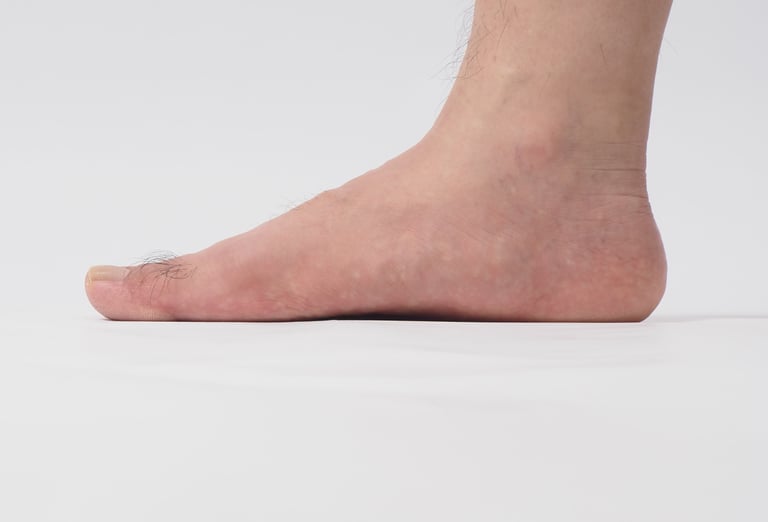
Flat feet occur when the arch on the inside of the foot is lower than usual or absent altogether. As a result, most or all of the sole comes into contact with the ground while standing or walking. Some people with flat feet experience no discomfort at all. Others develop foot pain, fatigue, ankle instability, knee discomfort, or even lower back problems over time.
The impact of flat feet varies from person to person. What matters most is not whether an arch is visible, but whether the foot is functioning efficiently and comfortably during daily activities.
What are flat feet?
A normal foot arch helps absorb shock, distribute body weight, and support efficient movement.
In people with flat feet, the arch collapses partially or completely when weight is placed on the foot. This can change the way forces travel through the feet, ankles, knees, hips, and lower back.
Flat feet can affect one foot or both feet and may develop during childhood or adulthood. The condition is surprisingly common. Many people live with flat feet for years before realizing that their recurring foot or leg discomfort may be connected to the way their feet are functioning.
Signs and symptoms of flat feet
Not everyone with flat feet experiences pain. However, when symptoms occur, they often include:
✔ Pain along the arch of the foot
✔ Heel pain after prolonged standing
✔ Tired or aching feet at the end of the day
✔ Swelling along the inside of the ankle
✔ Difficulty standing for long periods
✔ Frequent ankle instability
✔ Knee, hip, or lower back discomfort
✔ Uneven shoe wear patterns
Some people notice symptoms only during physical activity, while others experience discomfort even during routine daily tasks.
Why do flat feet cause pain?
The foot is designed to absorb and distribute forces with every step. When the arch is unable to provide adequate support, the mechanics of the foot can change significantly. This often leads to excessive inward rolling of the foot, known as overpronation. Over time, muscles, tendons, and ligaments may be forced to work harder to compensate for the reduced structural support. The result can be a chain reaction that affects more than just the feet.
What starts as mild arch fatigue may eventually contribute to:
Heel pain
Plantar fasciitis
Achilles tendon discomfort
Shin pain
Knee strain
Changes in walking mechanics
This is why flat feet should not simply be viewed as a cosmetic concern. For many people, they can influence overall movement and comfort.
What causes flat feet?
Flat feet can develop for several reasons. Some individuals are born with naturally low arches. Others develop flat feet gradually over time due to changes in muscles, tendons, ligaments, or joint structures.
Common causes include:
Genetics and family history
Weakness of the posterior tibial tendon
Aging and natural tissue changes
Obesity or increased body weight
Pregnancy
Foot and ankle injuries
Arthritis
Neuromuscular conditions
In adults, one of the most common causes is dysfunction of the posterior tibial tendon, which plays a key role in supporting the arch.
When this tendon becomes weakened or damaged, the arch may gradually collapse.
Flat feet in children
Parents are often concerned when they notice their child has flat feet.
In many cases, this is completely normal. Children commonly have flexible flat feet during early development. As bones, muscles, and ligaments mature, an arch may gradually form. Most children do not require treatment unless they experience pain, difficulty walking, frequent tripping, or limitations in physical activities.
If concerns persist, a professional assessment can help determine whether intervention is necessary.
Flat feet and plantar fasciitis
Flat feet and plantar fasciitis are closely connected.
When the arch lacks adequate support, increased strain may be placed on the plantar fascia, a thick band of tissue that runs along the bottom of the foot.
Over time, this extra stress can contribute to irritation and heel pain. Many people who seek treatment for plantar fasciitis discover that underlying foot mechanics, including flat feet, may be playing a significant role in their symptoms.
This is one reason why proper arch support is often considered an important part of managing plantar fasciitis.
Why footwear matters?
Footwear cannot change the structure of the foot permanently, but it can influence how forces are distributed during walking and standing.
Shoes that provide little support may allow excessive pronation and place additional strain on already stressed tissues.
Supportive footwear can help improve comfort, particularly for people who spend long hours on their feet.
However, footwear alone may not always address individual biomechanical needs.
Two people with flat feet may require completely different levels of support based on their anatomy, activity level, and walking pattern.
Why generic insoles are not always enough?
Many people purchase over-the-counter insoles hoping to solve foot discomfort quickly.
While generic insoles may provide cushioning, cushioning and support are not the same thing. A soft insole may feel comfortable initially, but it does not necessarily improve alignment or reduce abnormal loading patterns. The challenge is that flat feet affect people differently.
One person may require additional arch support. Another may need improved pressure distribution. Someone else may benefit from better heel control or motion guidance. Generic insoles are designed for the average foot. They cannot account for these individual differences.
As a result, some people continue experiencing symptoms even after trying multiple over-the-counter products.
A more personalized approach may be needed when symptoms persist or when foot mechanics are contributing to ongoing discomfort.
How custom insoles may help?
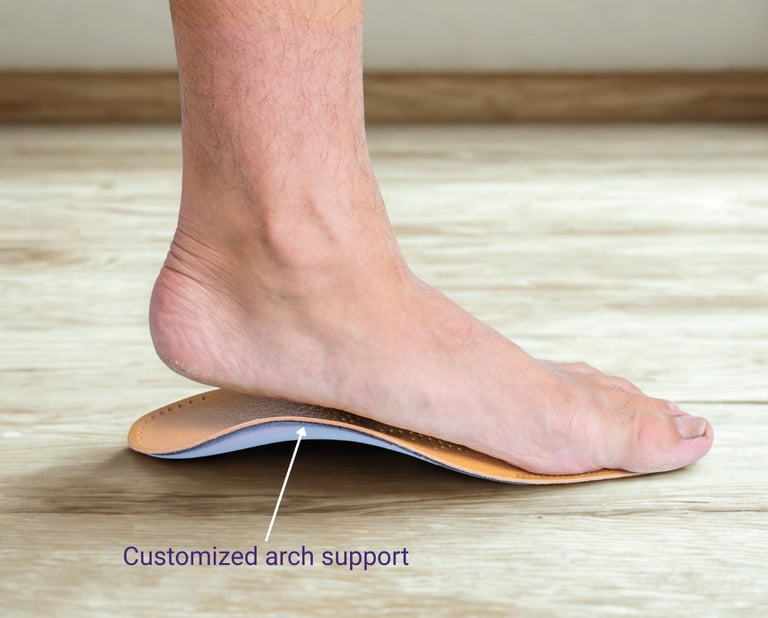
Custom orthotic insoles are designed around the individual’s foot structure rather than relying on a one-size-fits-all approach.
The goal is not simply to add padding but to improve how the foot functions during movement.
Depending on individual needs, customized insoles may help:
✔ Support the arch
✔ Improve pressure distribution
✔ Reduce strain on the plantar fascia
✔ Improve walking comfort
✔ Enhance foot stability
✔ Reduce excessive pronation
✔ Improve long-term comfort during standing and walking
Because every foot is different, personalized support can often provide a more targeted solution than generic products.
When should you consider a foot assessment?
A professional assessment may be beneficial if:
Foot pain occurs regularly
Heel pain persists despite changing footwear
You experience recurring plantar fasciitis
Long periods of standing cause discomfort
Knee or lower back pain appears related to foot mechanics
Your shoes wear unevenly
Daily activities are becoming uncomfortable
Addressing biomechanical issues early may help prevent symptoms from becoming more significant over time.
Living comfortably with flat feet
Having flat feet does not automatically mean you will experience pain or mobility limitations. Many people remain active and comfortable with appropriate support, footwear choices, and foot care strategies. The key is understanding how your feet function and identifying whether they are contributing to discomfort elsewhere in the body. When foot mechanics are optimized, walking, standing, exercising, and daily activities often become more comfortable and efficient.
Take the first step toward better foot support!
If flat feet are affecting your comfort, mobility, or daily activities, understanding your foot mechanics is the first step toward finding the right support.
A personalized assessment can help identify pressure points, alignment concerns, and support requirements that may be contributing to discomfort.
Discover how customized foot support can help you move with greater comfort, stability, and confidence.
FAQs
Are flat feet a problem?
Not always. Many people have flat feet without symptoms. Treatment is generally considered when flat feet contribute to pain, instability, or movement-related issues.
Can flat feet cause knee pain?
Yes. Changes in foot mechanics may influence alignment throughout the lower limb and can contribute to knee discomfort in some individuals.
Can flat feet cause plantar fasciitis?
Yes. Reduced arch support can increase strain on the plantar fascia, making plantar fasciitis more likely in some individuals.
What are the best insoles for flat feet?
The best insole depends on the individual’s foot structure, activity level, and support requirements. Custom orthotic insoles provide support tailored to the person rather than the average foot.
Can adults develop flat feet?
Yes. Flat feet can develop during adulthood due to tendon dysfunction, injury, arthritis, aging, or other factors.