
Hallux valgus (bunion) treatment: Causes, symptoms and support for lasting foot comfort
When a bump near your big toe becomes more than just a cosmetic concern
A lot of people first notice a bunion while putting on their shoes when their favourite pair that once fit comfortably suddenly feels tight around the front of the foot. Walking for long hours becomes uncomfortable, and the area around the big toe starts looking swollen or slightly bent.
At first, it may seem like a small problem. Over time, however, that small bump can begin affecting the way you walk, exercise, and even enjoy everyday activities.
A hallux valgus, commonly known as a bunion, is one of the most common foot conditions seen in adults. While some people experience only mild discomfort, others develop persistent pain, difficulty wearing shoes, and changes in foot alignment.
The good news is that early management, supportive footwear, and properly designed orthotic insoles can often help improve comfort and reduce excessive pressure before the condition progresses.
What is hallux valgus?
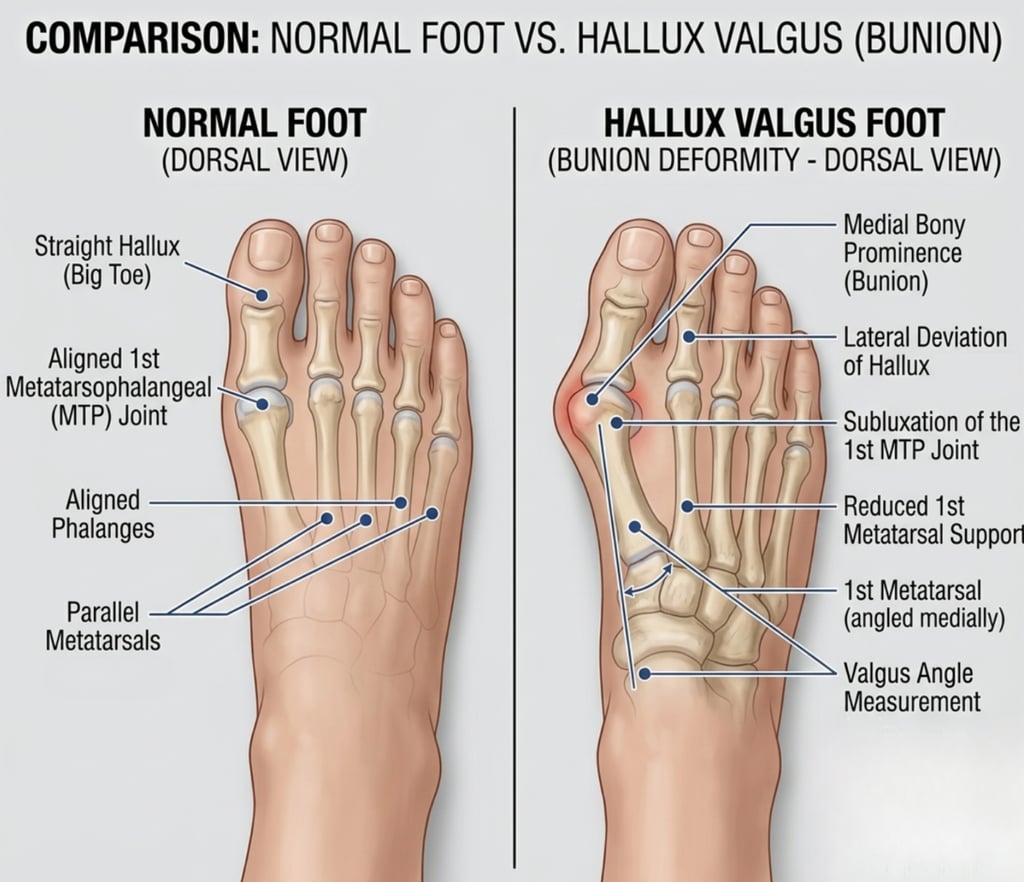
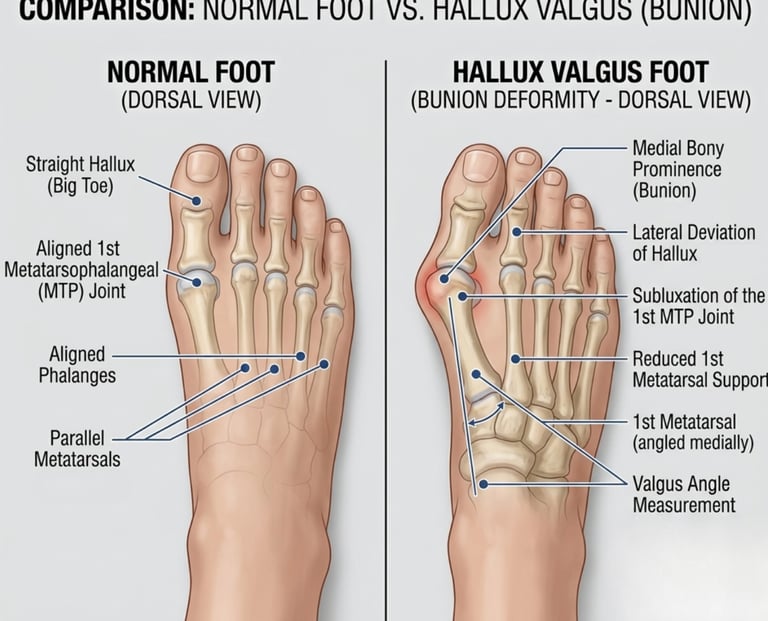
Hallux valgus is a foot deformity in which the big toe gradually shifts towards the second toe, causing the joint at the base of the toe to move outward. This creates the noticeable bump that most people refer to as a bunion. Although the bump is the most visible sign, the condition involves much more than a change in appearance.
As the position of the big toe changes, the mechanics of the entire foot can also change. The big toe plays an important role in balance and pushing the body forward during walking. When its alignment is altered, pressure is often redistributed across other parts of the foot. This is why many people with bunions eventually notice discomfort not only around the big toe but also beneath the ball of the foot or even in the knees and lower back.
Signs and symptoms of a bunion
Symptoms usually develop gradually and may become more noticeable over time.
You may experience:
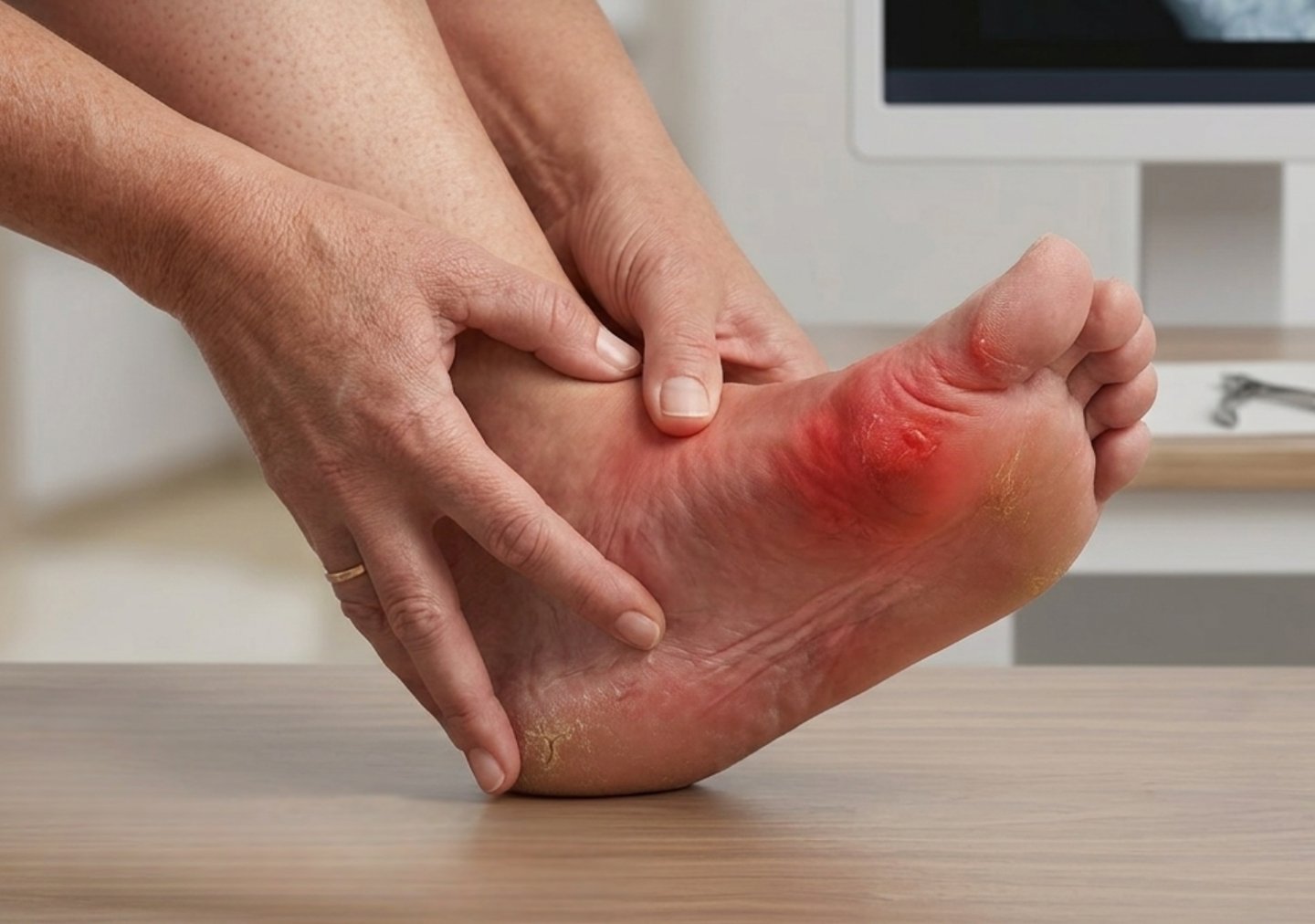
✔ A bony bump on the side of the big toe joint
✔ Pain or tenderness around the joint
✔ Redness or swelling
✔ Difficulty wearing narrow shoes
✔ Stiffness of the big toe
✔ Corns or calluses between the first and second toes
✔ Pain while walking or standing for long periods
Some people experience only occasional discomfort, while others find that the pain begins interfering with work, exercise, or daily activities.
What causes hallux valgus?
There isn’t one single cause. Hallux valgus usually develops because several factors gradually place extra stress on the front of the foot.
Common contributing factors include:
Family history and genetics
Flat feet or overpronation
Joint instability
Wearing narrow or tight footwear
High heels worn frequently
Arthritis
Certain neurological or connective tissue conditions
Although shoes do not directly cause bunions, poorly fitting footwear can accelerate symptoms in people who are already predisposed to developing them.
Why bunions become painful?
Many people assume the bump itself is responsible for all the pain. In reality, discomfort usually develops because the changing position of the big toe affects how pressure moves through the foot.
As the toe drifts inward, more force is transferred to nearby joints and soft tissues. The joint may become irritated from repeated rubbing against footwear.
At the same time, the front of the foot begins carrying weight differently during walking. Over months or years, this altered pressure can contribute to additional problems such as forefoot pain, calluses, metatarsalgia, and even reduced balance.
That is why managing bunions is not simply about the visible bump. It is also about improving the way the foot functions.
Can a bunion get worse over time?
For many people, yes.
Hallux valgus often progresses gradually, especially if the underlying foot mechanics remain unchanged. The angle of the big toe may continue increasing, making footwear less comfortable and placing additional pressure on surrounding joints. Not every bunion progresses at the same rate, but early attention can often help improve comfort and slow further changes.
Ignoring persistent symptoms may eventually make everyday activities more difficult than they need to be.
Choosing the right footwear
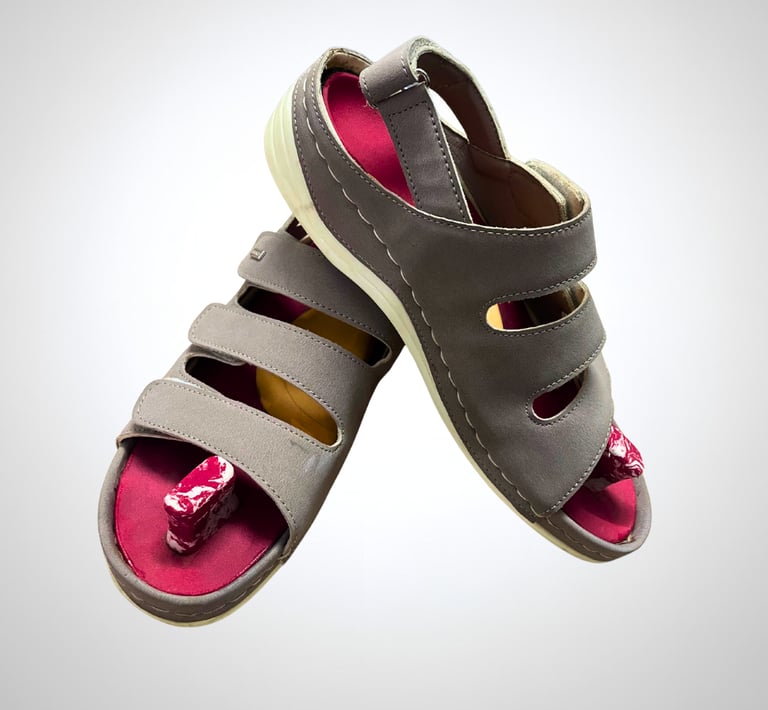
Footwear plays an important role in managing bunion discomfort. Shoes with a narrow toe box can squeeze the toes together, increasing pressure on the already irritated joint. Supportive footwear with adequate width allows the toes to move more naturally and reduces unnecessary rubbing.
When choosing shoes, look for:
✔ A wide toe box
✔ Soft upper materials
✔ Good arch support
✔ Stable heel support
✔ Adequate cushioning
Even with well-designed shoes, however, footwear alone may not fully address the changes in pressure caused by hallux valgus.

Why generic insoles are not always enough?
Many people purchase ready-made insoles hoping they will solve bunion pain. Some provide extra cushioning, while others advertise arch support.
Although these products may feel comfortable, they are designed for the average foot rather than the individual wearing them. People with bunions often develop unique pressure patterns. Some overload the ball of the foot. Others shift more weight to the outer edge of the foot to avoid pain around the big toe.
These differences cannot be addressed using a one-size-fits-all insole. As a result, discomfort may continue even after trying multiple over-the-counter products. Long-term improvement often requires understanding how your foot moves rather than simply adding more cushioning inside the shoe.
How custom orthotic insoles may help?
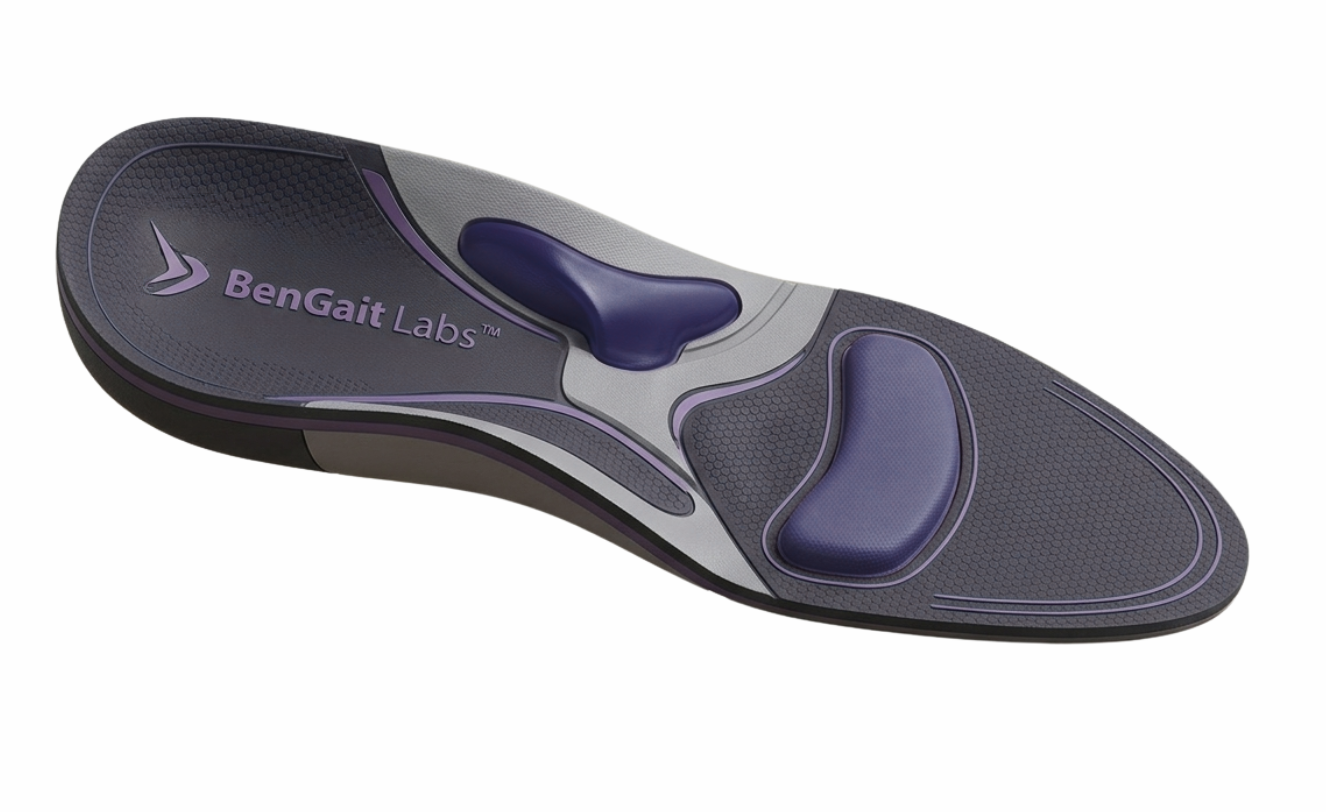
Custom orthotic insoles are designed around your individual foot structure and walking pattern.
Rather than attempting to correct the bunion itself, they focus on improving how forces are distributed across the foot during movement.
Depending on your assessment, customized orthotic insoles may help:
✔ Improve pressure distribution across the forefoot
✔ Support the arch during walking
✔ Reduce excessive stress around the big toe joint
✔ Improve overall foot stability
✔ Reduce fatigue during prolonged standing
✔ Enhance comfort inside supportive footwear
When should you consider a professional assessment?
If your bunion is beginning to affect everyday life, it may be time to have your feet assessed.
A professional evaluation may be helpful if:
Pain continues despite changing footwear
Walking becomes uncomfortable
The bump appears to be increasing in size
You develop calluses beneath the forefoot
Your shoes wear unevenly
You notice pain spreading to other areas of the foot
Understanding how your foot functions is often the first step towards choosing the most appropriate support.
Living comfortably without letting bunion pain hold you back!
A lot of us believe that surgery is the only option for bunions.
In reality, surgery is usually considered only when conservative treatment no longer provides adequate relief.
For many individuals, a combination of supportive footwear, activity modification, and personalized orthotic support can significantly improve everyday comfort.
Understanding how your feet function is the first step toward improving comfort and reducing unnecessary pressure on the big toe joint.
If you’re experiencing persistent bunion pain or difficulty finding comfortable footwear, a professional foot assessment can help identify the underlying biomechanical factors and determine whether customized orthotic insoles may provide the support your feet need.
FAQs
What is the difference between hallux valgus and a bunion?
They are the same condition. Hallux valgus is the medical term, while bunion is the name most commonly used by the general public.
Can bunions be treated without surgery?
Yes. Many people manage bunion symptoms through supportive footwear, activity modification, and custom orthotic insoles. Surgery is generally considered only when conservative measures no longer provide sufficient relief.
Do orthotic insoles help bunions?
Custom orthotic insoles cannot remove a bunion, but they can improve pressure distribution, support foot alignment, and reduce stress on the big toe joint, helping many people walk more comfortably.
What shoes are best for bunions?
Shoes with a wide toe box, supportive soles, and good arch support are generally more comfortable than narrow or pointed footwear.
Can flat feet cause bunions?
Flat feet and excessive pronation may contribute to the development or progression of hallux valgus by altering the way forces travel through the foot.