
Is pain in the ball of your foot making everyday walking uncomfortable?
Metatarsalgia treatment: Causes, symptoms and support for ball of foot pain
Does it feel like you’re walking on a small pebble hidden inside your shoe?
Or perhaps you notice a burning, aching, or sharp pain beneath the front part of your foot after standing for long hours or walking even short distances.
Pain in the ball of the foot is often overlooked in the beginning. Many people assume it is simply caused by tired feet or uncomfortable footwear. But when the discomfort keeps returning, it may be a condition called metatarsalgia.
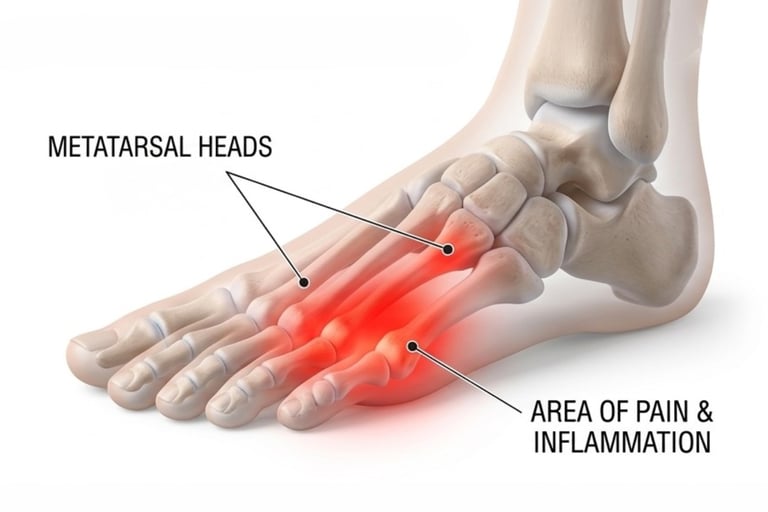
Although the name sounds complex, metatarsalgia simply refers to pain and inflammation around the metatarsal heads, the area just behind your toes that carries a significant amount of your body weight every time you take a step.
The good news is that with the right diagnosis, proper footwear, and personalized foot support, many people are able to manage symptoms effectively and return to comfortable daily activities.
What is metatarsalgia?
Metatarsalgia is a condition that causes pain in the forefoot, particularly under the ball of the foot. Every step you take places pressure on the metatarsal bones. Normally, this pressure is distributed evenly across the foot. However, changes in foot structure, walking mechanics, or excessive loading can cause certain metatarsal heads to bear more weight than they are designed to handle. Over time, this repeated stress may irritate the surrounding tissues, leading to pain, inflammation, and discomfort while walking. Metatarsalgia itself is not a disease. Instead, it is a symptom that often develops because something is altering the way pressure is distributed across the foot.
Common symptoms of metatarsalgia
Symptoms usually develop gradually rather than appearing overnight.
You may experience:
✔ Pain beneath the ball of the foot
✔ A burning or aching sensation while standing
✔ Sharp pain during walking or running
✔ A feeling of walking on a small stone
✔ Increased discomfort when barefoot
✔ Pain that improves with rest
✔ Numbness or tingling in the toes in some cases
For many people, the discomfort becomes worse after long periods of standing, physical activity, or wearing unsupportive footwear.
Why does metatarsalgia happen?
The front part of the foot naturally absorbs a large amount of force during walking. When that force becomes concentrated in one area instead of being distributed evenly, the tissues beneath the metatarsal heads become overloaded. Several factors can contribute to this imbalance.
Some of the most common causes include:
High arches
Flat feet
Bunions or toe deformities
Tight calf muscles
Wearing high heels frequently
Thin cushioning beneath the forefoot
Obesity
Running and jumping sports
Aging and natural loss of foot padding
In many cases, metatarsalgia develops because several of these factors occur together rather than from a single cause.
Why the ball of the foot becomes painful?
Every time your foot pushes off the ground, the forefoot takes on a significant portion of your body weight. If the arch is not functioning properly or your walking pattern changes, certain metatarsal heads begin carrying more pressure than others.
Imagine carrying a heavy backpack using just one shoulder instead of both. Eventually, that shoulder becomes sore because it is doing more work than it should. The same principle applies to the front of your foot. When pressure is concentrated repeatedly in one area, pain gradually develops.
This is why simply resting the foot may reduce symptoms temporarily, but the discomfort often returns if the underlying pressure pattern remains unchanged.
Metatarsalgia treatment options
The most effective treatment depends on the underlying cause of the condition.Many people improve with conservative treatment, especially when intervention begins early.
Treatment may include:
✔ Activity modification
✔ Supportive footwear
✔ Stretching exercises
✔ Weight management where appropriate
✔ Ice application after activity
✔ Custom orthotic insoles
✔ Physiotherapy when required
Why footwear plays an important role?
Shoes influence how forces travel through your feet throughout the day.
Footwear with poor cushioning, inadequate arch support, or a narrow toe box may increase pressure beneath the forefoot, especially if worn for prolonged periods. Supportive shoes help improve comfort, but footwear alone may not completely correct the underlying biomechanical issues responsible for metatarsalgia.
That is why some people continue experiencing pain even after changing their shoes.
Why generic insoles may not provide lasting relief?
Many people purchase gel pads or ready-made insoles hoping to reduce pain beneath the ball of the foot. Some notice temporary improvement because additional cushioning reduces impact for a short time. However, cushioning alone does not change how pressure is distributed during walking.
Every person’s foot is different. Some people overload the second metatarsal. Others place excessive pressure beneath multiple metatarsal heads because of flat feet, high arches, or altered gait mechanics.
A generic insole cannot identify or correct these individual loading patterns. As a result, pain may continue returning even after trying several different products.
Long-term improvement often requires addressing the reason the pressure developed in the first place rather than simply making the shoe feel softer.
How orthotic custom insoles may help?
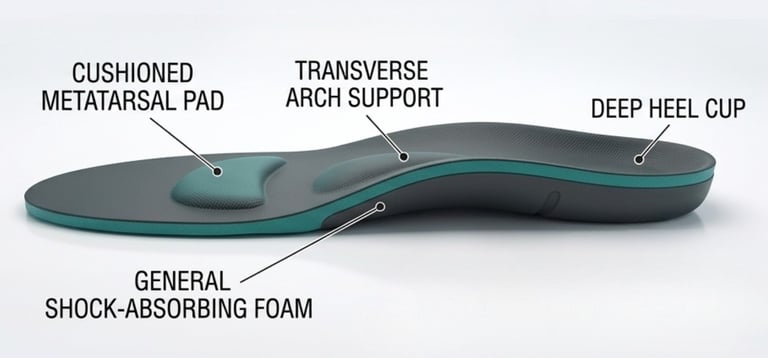
Custom orthotic insoles are designed after evaluating the individual’s foot structure, walking pattern, and pressure distribution. Instead of providing uniform cushioning, they are designed to support areas that need assistance while reducing excessive loading beneath sensitive regions of the forefoot.
Depending on the assessment, customized insoles may help:
✔ Redistribute pressure across the forefoot
✔ Reduce stress beneath the metatarsal heads
✔ Improve arch support
✔ Enhance walking comfort
✔ Improve foot alignment
✔ Reduce fatigue during prolonged standing
When should you seek professional assessment?
You should consider a foot assessment if:
Pain beneath the ball of the foot continues for several weeks
Walking becomes uncomfortable
Pain interferes with work or exercise
Generic insoles have not helped
You notice calluses developing beneath the forefoot
Symptoms continue returning despite changing footwear
Understanding how pressure is distributed across your feet can often provide valuable insight into the cause of ongoing discomfort.
Living comfortably with metatarsalgia
Persistent forefoot pain deserves attention, especially if it is affecting your ability to work, exercise, or enjoy daily life. The earlier the underlying cause is identified, the easier it is to improve comfort and reduce unnecessary stress on the forefoot. With the right combination of supportive footwear, activity modification, and personalized foot support, many people are able to return to walking comfortably again.
Take the pressure off every step
Pain beneath the ball of your foot should not limit the way you move through life. Understanding what is causing that pressure is the first step toward effective metatarsalgia treatment.
If you’re experiencing persistent forefoot pain, a professional foot assessment can help identify pressure patterns and determine whether customized orthotic insoles may provide the support your feet need.
FAQs
What is metatarsalgia?
Metatarsalgia is pain and inflammation affecting the ball of the foot, usually caused by excessive pressure beneath the metatarsal bones.
What is the best treatment for metatarsalgia?
Treatment depends on the cause but often includes supportive footwear, activity modification, stretching, and custom orthotic insoles to improve pressure distribution.
Can custom insoles help metatarsalgia?
Yes. Custom orthotic insoles are designed to redistribute pressure across the forefoot and reduce stress on painful areas during walking.
Is metatarsalgia permanent?
Not usually. Many people experience significant improvement when the underlying biomechanical causes are identified and managed appropriately.
Can flat feet cause metatarsalgia?
Yes. Flat feet can change pressure distribution across the foot, increasing stress beneath the forefoot and contributing to metatarsalgia.