
Heel spur: Causes, symptoms and support options
What is a heel spur?
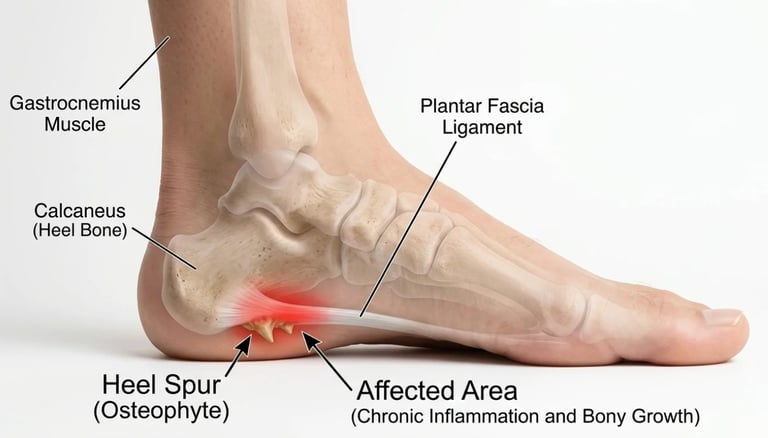
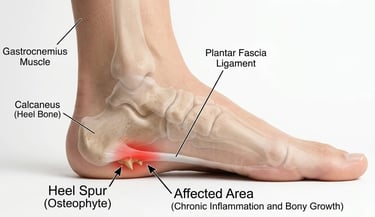
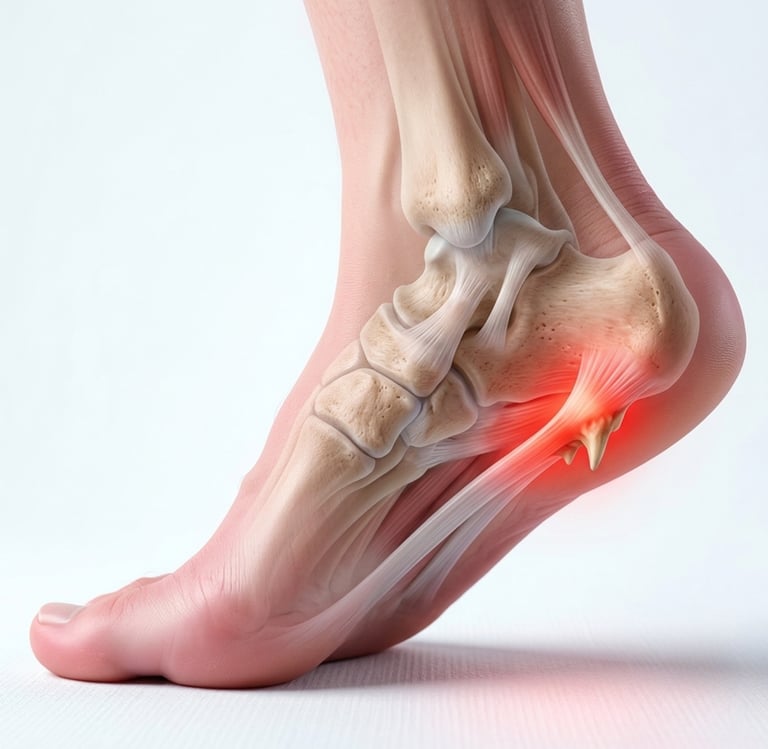
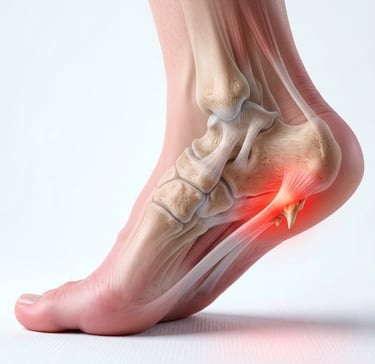
A heel spur is a small calcium deposit that gradually develops on the underside of the heel bone. It forms over time as the body responds to repeated stress where muscles and ligaments attach to the heel.
Heel spurs usually develop slowly rather than overnight. Many people have them without ever knowing because they do not always cause pain.
Problems often begin when the surrounding soft tissues become irritated or inflamed. This is why heel spurs are frequently associated with conditions such as plantar fasciitis, although the two conditions are not exactly the same.
Simply seeing a heel spur on an X-ray does not always explain someone’s symptoms. A clinical assessment is equally important to understand the real source of discomfort.
Common symptoms of a heel spur
Heel pain affects everyone differently, but some symptoms appear more often than others.
You may notice:
✔ Sharp pain under the heel when taking your first steps in the morning
✔ Pain that improves slightly after walking but returns later in the day
✔ Tenderness when pressing the bottom of the heel
✔ Discomfort after standing for long hours
✔ Pain during walking, climbing stairs, or exercising
✔ A feeling that you are stepping on a small stone or hard object
Some people experience symptoms every day, while others notice pain only after increased activity.
Why does a heel spur develop?
Heel spurs usually develop because the heel is exposed to repeated stress over many months or even years.
Several factors can increase this stress, including:
Flat feet or fallen arches
High arches
Plantar fasciitis
Standing for prolonged hours
Walking on hard surfaces every day
Poorly supportive footwear
Excess body weight
Tight calf muscles
Running and high-impact sports
Often, it is not just one factor but a combination of lifestyle, foot structure, and movement patterns that contribute to the problem.
Heel spur or plantar fasciitis? Understanding the difference
Many people use these terms interchangeably, but they are different conditions.
A heel spur is a bony projection that develops on the heel bone.
Plantar fasciitis is irritation or inflammation of the plantar fascia, the thick band of tissue that supports the arch of the foot.
The two often occur together because both are linked to repeated stress on the bottom of the foot. This is why treating only the symptoms without addressing the underlying foot mechanics may provide temporary relief but may not reduce the stress causing the problem.
Can a heel spur heal on its own?
A heel spur usually does not disappear on its own. The good news is that many people do not actually need the bony growth removed.
The goal is to reduce the stress placed on the heel so the surrounding tissues can function more comfortably.
Many people are able to return to normal daily activities through a combination of supportive footwear, stretching, activity modification, and appropriate foot support.
Why proper foot support matters?
Every step you take places force through your heel. When your foot lacks adequate support, these forces become concentrated in smaller areas instead of being distributed evenly across the foot. Over time, this repeated loading can continue irritating the tissues around the heel.
Improving pressure distribution is often one of the key goals when managing persistent heel pain. Rather than allowing one area of the heel to absorb most of the impact, appropriate support helps spread forces more naturally across the foot during walking.
That is why addressing biomechanics is often just as important as managing pain itself.
Why generic insoles may not solve heel pain?
Many people purchase soft gel heel cups or generic insoles hoping for immediate relief. Sometimes they help for a while. Sometimes they do not.
The reason is simple. Most over-the-counter insoles are designed to provide cushioning rather than correcting the way the foot functions.
Two people may both have heel pain, but for completely different reasons. One may have flat feet and excessive pronation. Another may have high arches and poor shock absorption. Someone else may have uneven pressure distribution caused by their walking pattern.
A generic insole cannot adapt to these differences. It may feel comfortable initially, but comfort alone does not always reduce the mechanical stress contributing to heel pain.
How orthotic custom insoles may help?
Custom orthotic insoles are designed around your individual foot structure rather than an average template. Their purpose is not simply to make your shoes feel softer. Instead, they help improve how the foot moves and how pressure is distributed throughout the walking cycle.
Depending on your assessment, customized insoles may help:
✔ Support the arch more effectively
✔ Reduce excessive pressure beneath the heel
✔ Improve overall foot alignment
✔ Reduce strain on the plantar fascia
✔ Improve comfort during standing and walking
✔ Support long-term foot health
Because every person’s feet function differently, a personalized approach often provides more targeted support than generic products.


When should you consider a professional assessment?
If heel pain continues despite changing shoes or trying different insoles, it may be time to understand what is causing the problem.
Consider a foot assessment if you:
Experience heel pain most mornings
Have pain after standing at work
Notice recurring plantar fasciitis
Walk with discomfort every day
Feel your symptoms are gradually getting worse
Early assessment often makes it easier to identify the underlying biomechanical factors contributing to persistent heel pain.
Living beyond heel pain!
Many people accept heel pain as something they simply have to live with. They avoid long walks, reduce physical activity, or push through the discomfort because it has become part of daily life. It doesn’t have to stay that way.
Understanding the reason behind your heel pain and improving the way your feet are supported can often make everyday movement more comfortable.
Whether your symptoms are related to a heel spur, plantar fasciitis, or other biomechanical issues, the right support begins with understanding how your feet work.
Take the first step towards comfortable walking
If heel pain has become part of your daily routine, a professional foot assessment can help identify the underlying biomechanical factors and determine whether customized foot support may improve your comfort.
FAQs
Are heel spurs always painful?
No. Many people have heel spurs without experiencing any symptoms.
Can heel spurs cause plantar fasciitis?
Heel spurs and plantar fasciitis are closely related but are different conditions. They often occur together because both result from repeated stress on the heel.
What are the best insoles for heel spurs?
The best insoles are those that improve pressure distribution and provide support based on your individual foot mechanics. Custom orthotic insoles are often recommended for persistent symptoms.
Can walking make a heel spur worse?
Walking itself is not necessarily harmful, but prolonged walking without adequate support may continue placing stress on the heel and surrounding tissues.
Do heel spurs require surgery?
Most heel spurs are managed without surgery. Conservative treatment and proper foot support are effective for many people.