
Custom orthotics: Everything you need to know before buying in India
Discover how custom orthotics are designed around your unique foot structure and biomechanics to improve comfort, reduce pain, and support healthier movement. Learn who can benefit, how they are made, and what to consider before buying custom orthotics in India.
CUSTOM ORTHOTICS
7/3/20269 min read
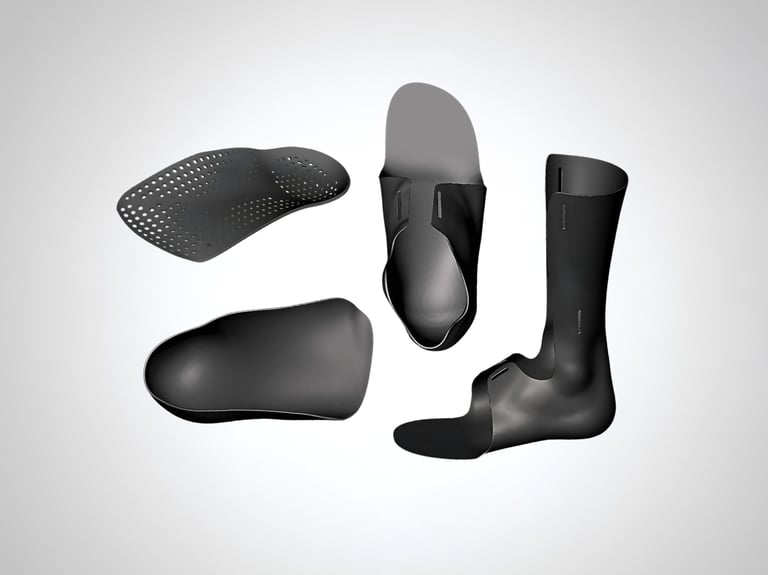
Custom orthotics: Everything you need to know before buying in India
Are your feet trying to tell you something?
Most people don’t think much about their feet until they start hurting.
It often begins with a dull ache at the end of a long day. Maybe your heels hurt when you get out of bed in the morning. Perhaps standing at work has become uncomfortable, or your favourite evening walk doesn’t feel as enjoyable as it used to.
The first instinct is usually simple like- buy a softer shoe, add a gel insole, try memory foam, rest for a few days, etc.. sometimes those changes provide temporary relief. But if the discomfort keeps returning, it’s often because the real problem hasn’t been addressed.
Pain isn’t always caused by the area that hurts. Your heel may be painful because your arch isn’t supporting your body properly. Pain beneath the ball of your foot could be the result of uneven pressure every time you walk. Even recurring knee or lower back discomfort can sometimes begin with the way your feet move.
This is where custom orthotics are different.
Rather than simply making your shoes feel softer, they are designed to improve how your feet function. They work with your unique foot structure, walking pattern, and pressure distribution to provide support where it’s actually needed. If you’re wondering whether custom orthotics are worth considering, this guide will help you understand what they are, who they benefit, and what to look for before making a decision.
What are custom orthotics?
Custom orthotics are medical-grade foot support devices that are designed specifically for an individual rather than for the average shoe size.
Unlike ready-made insoles that come off a shelf, custom orthotics are developed after assessing how your feet function during standing and walking.
That assessment may include:
✔ Foot shape and arch profile
✔ Walking mechanics
✔ Pressure distribution
✔ Joint alignment
✔ Lifestyle and activity level
✔ Existing foot conditions
The information gathered during this process helps determine the shape, support, and functional features of the orthotic.Every pair is created with a purpose.
For someone who spends ten hours a day standing, the design may focus on reducing fatigue. For an athlete, it may improve stability during movement. Someone managing diabetes may need pressure redistribution to protect vulnerable areas of the foot. The support isn’t generic because your feet aren’t generic.
Why understanding your feet matters more than buying another insole?
Imagine trying to fix blurred vision by buying random reading glasses from a supermarket. They might help for a while. But if the prescription isn’t right, the problem remains.
Foot support works in a similar way. Two people can wear the same shoe size, yet have completely different arches, pressure patterns, muscle strength, and walking mechanics. One may naturally roll the foot inward while walking. Another may place excessive pressure beneath the forefoot. Someone else may overload the heel every time they take a step. Yet all three could buy the exact same ready-made insole.
That’s why choosing support based only on comfort can sometimes be misleading. What feels soft isn’t always what your feet actually need.
The most effective orthotics are designed after understanding how your feet function, not just where they hurt.
The way you walk affects your entire body
Your feet are the foundation of movement.
When the mechanics of the foot change, your body naturally adjusts to compensate. These adjustments may seem insignificant at first, but over time they can place extra stress on muscles and joints further up the body.
For example, people with flat feet often experience increased strain on the plantar fascia because the arch is unable to support weight efficiently. Likewise, persistent heel pain may develop when the foot absorbs impact unevenly during walking. Excess pressure beneath the forefoot can contribute to metatarsalgia, while changes in foot alignment may worsen hallux valgus (bunions) over time. Even conditions such as knee discomfort or lower back pain can sometimes be influenced by the way forces travel through the feet.
This doesn’t mean every ache starts in the feet. It simply highlights how closely the entire body works together.
Improving foot mechanics may reduce unnecessary stress before it spreads elsewhere.
Who can benefit from custom orthotics?
✔ High arches (Pes Cavus)
✔ Overpronation
✔ Foot fatigue from prolonged standing
✔ Certain sports-related overuse injuries
They can also be helpful for professionals who spend most of their day on their feet, including healthcare workers, teachers, retail staff, factory employees, chefs, and warehouse workers. Because no two people move in exactly the same way, orthotics should never be viewed as one-size-fits-all products.
The same condition may require a completely different level of support depending on the individual’s biomechanics, occupation, and activity level.
Custom orthotics vs ready-made insoles
This is one of the biggest questions people ask before investing in foot support.
At first glance, both products appear similar. They fit inside your shoes. They provide cushioning. They claim to improve comfort. So what makes them different?
The answer lies in personalization. A ready-made insole is manufactured for the general population. It provides the same shape, the same arch height, and the same level of support to everyone. That may be enough if your only goal is to make your shoes feel softer. But if your discomfort is related to how your feet function, cushioning alone rarely solves the underlying problem.
Custom orthotics are developed differently. Instead of asking your feet to adapt to a standard product, they are designed around your individual anatomy and movement. The result is support that is far more specific to your needs. Think of it like wearing a tailored suit instead of buying one straight off the rack. Both are wearable. Only one is made specifically for you.
Why the softest insole isn’t always the best choice?
It’s easy to assume that softer automatically means better. In reality, that’s not always true.
Imagine standing on a very soft mattress. It feels comfortable for a few moments. But after a while, your body has to work much harder to stay balanced because the surface keeps giving way beneath you. The same principle can apply to foot support. An insole that compresses too easily may feel pleasant initially but offer very little control over how your foot moves.
That’s why clinicians don’t focus only on cushioning. They evaluate where support is needed, where pressure should be reduced, and how your foot behaves throughout the walking cycle. For many people, effective orthotics are not about making every step softer. They’re about making every step more efficient.
When your feet move better, they often feel better too.
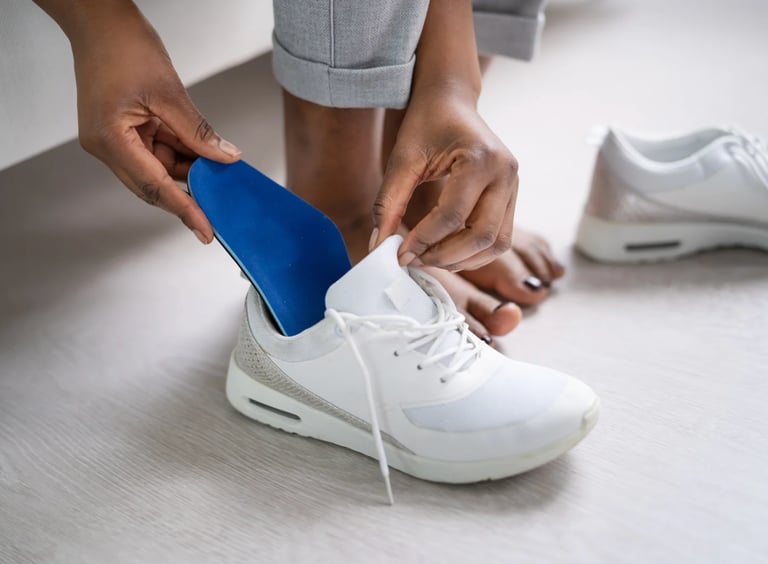
Many people assume orthotics are only for athletes or older adults. In reality, anyone whose daily activities place repeated stress on the feet may benefit from better support.
Custom orthotics are commonly recommended for people experiencing:
How are custom orthotics made?
Not long ago, custom orthotics were created using plaster casts or foam impression boxes. While these methods are still used in some clinics, advances in digital technology have made the process far more precise and consistent.
Today, many clinicians begin with a digital foot assessment, which provides a detailed understanding of your foot shape, alignment, and pressure distribution. This information helps create orthotics that are tailored to your unique biomechanics rather than relying on approximations.
A well-designed orthotic considers how your foot moves during every stage of walking, where excessive pressure develops, and how support can be introduced without restricting natural movement. Modern digital workflows also allow clinicians to make highly controlled adjustments before the orthotic is manufactured, improving both precision and consistency.
What makes a good custom orthotic?
Not every custom orthotic is created to the same standard. Two orthotics may look similar at first glance, but the way they perform can be completely different.
An effective orthotic should do far more than provide cushioning. It should work with your foot, not against it.
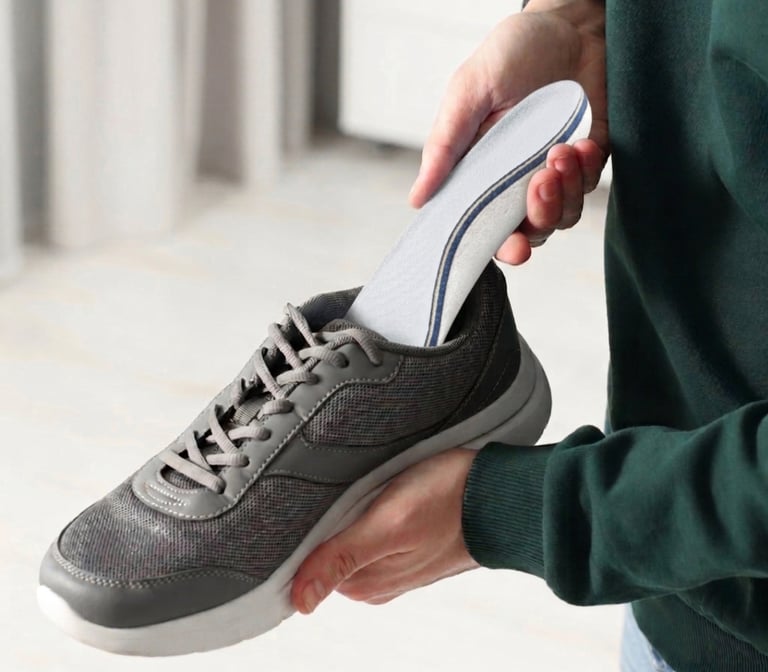

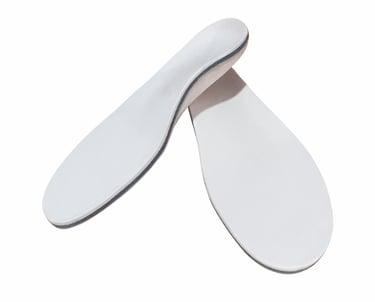
A well-designed custom orthotic aims to:
✔ Support the foot without feeling overly rigid
✔ Redistribute pressure away from overloaded areas
✔ Improve stability during walking
✔ Reduce excessive motion where necessary
✔ Fit comfortably inside appropriate footwear
✔ Match your daily activities and lifestyle
Perhaps most importantly, it should be based on a proper clinical assessment rather than assumptions.
Every person’s feet tell a different story. The orthotic should reflect that.
Materials matter, but design matters even more..
Many people ask which material is best for custom orthotics.
The honest answer is… there isn’t one material that’s perfect for everyone. Some require a firmer orthotic for greater control, while others benefit from a combination of supportive and cushioning materials.
The choice depends on several factors, including:
Your diagnosis
Body weight
Activity level
Foot structure
Daily footwear
Pressure distribution
A runner training for a marathon has very different requirements from someone who spends eight hours standing behind a retail counter. Likewise, someone managing diabetic foot concerns needs a completely different approach from a person with plantar fasciitis.
Good orthotics aren’t chosen from a catalogue but crafted to suit the person wearing them.
Common myths about custom orthotics
There’s a lot of misinformation surrounding orthotics. Let’s clear up a few common misconceptions..
Myth 1: Orthotics weaken your feet
One of the biggest myths is that wearing orthotics causes your feet to become “lazy.” Current evidence does not support this claim. Custom orthotics are designed to improve how forces move through the foot. They support areas under excessive stress while allowing your muscles to continue functioning naturally. They’re a support system, not a replacement for healthy muscles.
Myth 2: Everyone needs the same arch support
Arch height alone doesn’t determine what type of orthotic someone needs. Two people with similar-looking feet can have completely different movement patterns. That’s why an assessment is always more valuable than guessing.
Myth 3: Expensive shoes eliminate the need for orthotics
Supportive footwear plays an important role in foot health. However, even the best shoe is manufactured for a general audience. Custom orthotics provide personalized support inside that shoe, helping improve how forces are distributed beneath your feet. The two often work best together rather than replacing one another.
How to choose the right custom orthotics provider in India?
Choosing the right provider is just as important as choosing the orthotic itself. Instead of focusing only on price, consider the overall clinical process.
Ask questions such as:
✔ Is a detailed foot assessment performed?
✔ Is your walking pattern evaluated?
✔ Are pressure points identified?
✔ Is the orthotic customized for your condition?
✔ Will adjustments be available if required?
✔ Does the provider explain why a particular design has been recommended?
A provider should help you understand your feet, not simply hand over a product.The more personalized the assessment, the more meaningful the final solution is likely to be.
Why personalized foot care delivers better long-term results?
Foot pain rarely develops overnight. It usually builds gradually through thousands of steps taken every day. That’s why lasting improvement often comes from addressing the underlying mechanics rather than chasing temporary relief. Whether you’re dealing with heel pain, flat feet, metatarsalgia, or simply tired feet after long hours of standing, understanding why your symptoms occur is the first step towards improving them. Custom orthotics are one part of that journey. Combined with appropriate footwear, regular monitoring, and professional guidance, they can help improve comfort, reduce unnecessary stress on your feet, and support healthier movement over time.
At BenGait Labs, every orthotic begins with a detailed clinical assessment and is precision engineered, digitally customized, and corrective by design to match your individual biomechanics, lifestyle, and goals.
Whether you’re managing a long-standing condition or looking to prevent future problems, the right support starts with understanding your feet.
Frequently Asked Questions (FAQs)
Are custom orthotics worth it?
If your foot pain is linked to biomechanics rather than temporary fatigue, custom orthotics may provide more targeted support than generic insoles because they are designed around your individual foot function.
How long do custom orthotics last?
The lifespan depends on the materials used, activity level, body weight, and daily use. With appropriate care and regular reviews, many custom orthotics continue performing well for several years.
Can custom orthotics help plantar fasciitis?
Yes. Many people with plantar fasciitis benefit from custom orthotics that help support the arch, improve pressure distribution, and reduce strain on the plantar fascia.
Can I wear custom orthotics in any shoe?
They fit best in supportive footwear with enough internal space. Some designs can be made specifically for sports shoes, work shoes, or everyday footwear.
Do I need custom orthotics if I don’t have foot pain?
Not necessarily. However, people with abnormal foot mechanics, previous injuries, diabetes, or occupations that involve prolonged standing may benefit from an assessment before pain develops. Early intervention often helps prevent bigger problems later.